
New Opportunities for European Exporters in India
The EU–India Free Trade Agreement is set to create significant new opportunities for European exporters by reducing tariffs, simplifying trade procedures, and improving market access across industrial, agri-food, and service sectors. This development positions India as a key strategic market for European businesses seeking international growth.
1/30/20262 min read
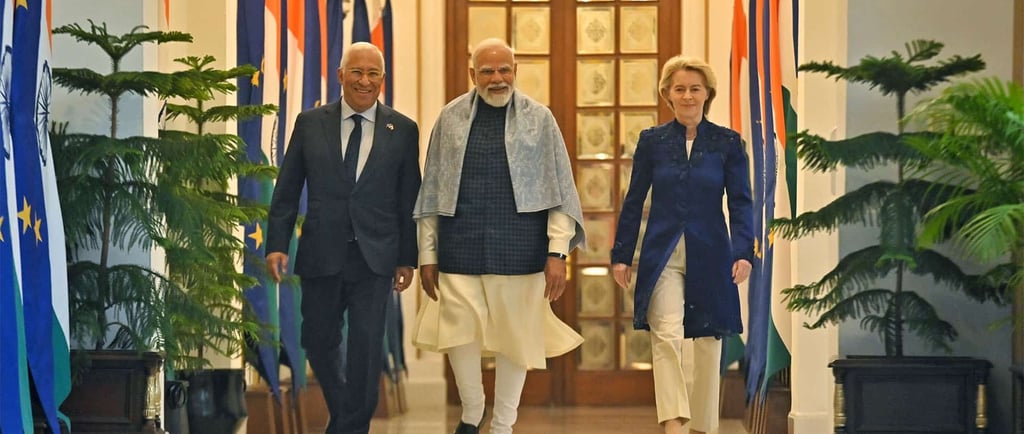
New Opportunities for the European Market Following the EU–India Free Trade Agreement
The European Union and India are advancing toward the conclusion of a Free Trade Agreement (FTA) that is expected to significantly reshape trade relations between both economies. This agreement will strengthen economic ties between two of the world’s largest democracies while creating substantial strategic opportunities for European companies in one of the fastest-growing global markets.
India, currently the world’s fourth-largest economy and the most populous country, has historically maintained high tariffs and administrative barriers limiting European exports. The new agreement aims to substantially reduce these obstacles, enabling faster, more cost-efficient, and competitive trade flows.
Expected Impact on European Exports
The agreement is expected to double EU exports to India, supporting growth across industrial, agri-food, and service sectors. More than 90% of EU goods exports will benefit from tariff reductions or full elimination, generating estimated savings of up to €4 billion annually for European businesses.
In addition, improved access to India’s services market — particularly financial, maritime, and logistics services — will open new commercial opportunities and support job creation across Europe.
Key Benefits for European Industry
The agreement will significantly improve market access through unprecedented tariff reductions. Industries such as machinery, chemicals, pharmaceuticals, medical equipment, and automotive manufacturing will gain strong competitive advantages as tariffs — currently reaching up to 110% in some sectors — are progressively reduced or eliminated.
This enhanced access positions EU exporters ahead of many global competitors within the Indian market.
Opportunities for the Agri-Food Sector
The agreement will reduce or eliminate tariffs that currently average above 36% on EU agri-food exports, opening access to a large and rapidly expanding consumer market.
Key benefiting products include:
Olive oil and vegetable oils (0% tariffs)
Fruit juices and processed foods, including pet food (0%)
Sheep meat (0%)
Selected fruits such as kiwis and pears (significant reductions)
Sensitive European agricultural sectors will remain protected, ensuring balanced market liberalization.
Trade Facilitation and Legal Certainty
The agreement introduces simplified customs procedures, improved regulatory transparency, and strengthened protection of European intellectual property rights, including trademarks and geographical indications.
Clear rules of origin will prevent unfair re-export practices, ensuring that only products substantially produced within the EU or India benefit from tariff preferences.
Sustainable and Digital Trade Development
The FTA includes binding commitments related to sustainability, labor rights, and environmental protection aligned with international agreements such as the Paris Climate Agreement. It also establishes a framework for secure and predictable digital trade, encouraging innovation and technological cooperation.
Strategic Outlook
For European companies, the agreement represents a major opportunity to diversify export markets, reduce trade costs, and expand their presence in Asia. The combination of preferential market access, reduced trade barriers, and enhanced legal certainty positions India as a key strategic destination for European international expansion in the coming years.
Contact
Business inquiries only. Privacy respected.
contact@marcelvian.com
© 2025. All rights reserved.