
Poland’s Economic Growth and Its Impact on Agri-Food and Pet Food Export Markets
An analysis of Poland’s economic growth and its impact on international agri-food and pet food trade, highlighting new export opportunities, market expansion trends, and evolving supply chain dynamics across Europe.
12/31/20253 min read
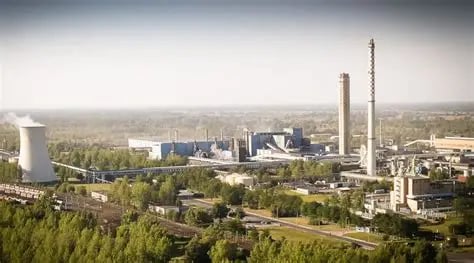
Poland’s Economic Rise: A New Growth Engine for European Trade and Export Markets
From Post-Communist Transition to Regional Economic Power
Over the past three decades, Poland has undergone one of the most remarkable economic transformations in Europe. Since the fall of communism in 1989, the country has maintained average annual GDP growth close to 4%, positioning itself today as one of the most dynamic economies within the European Union.
With a GDP approaching $980 billion in 2024, Poland’s economy now rivals the combined output of several Eastern European countries, despite having roughly half their total population. This sustained expansion has turned Poland into a strategic economic hub and an increasingly important market for trade, investment, and export-oriented businesses.
Structural Reforms That Built Long-Term Growth
Poland’s economic success began with deep structural reforms implemented in the early 1990s under the Balcerowicz Plan. The country rapidly transitioned from a centrally planned system to a market economy through:
Liberalization of prices and international trade
Privatization of state-owned enterprises
Fiscal and monetary stabilization policies
Opening to foreign direct investment (FDI)
Although these reforms initially triggered recession and unemployment, they created strong macroeconomic foundations that enabled decades of stable expansion and economic resilience.
Poland became the first post-communist economy to recover from transition recession and has since demonstrated consistent growth even during global crises, including the 2008 financial downturn.
A Diversified Economy Driving Export Expansion
Today, Poland’s economic strength is supported by a diversified industrial and services base.
Key growth sectors include:
Business services and technology
The rapid expansion of shared service centers, IT outsourcing, and professional services has boosted employment and export capacity.
Industrial manufacturing
Poland has emerged as a major European manufacturing hub, particularly in:
automotive production and electromobility
electric vehicle battery manufacturing
household appliances
machinery and industrial components
Companies such as LG Energy Solution and Northvolt have invested heavily in production facilities, reinforcing Poland’s role in Europe’s industrial supply chains.
Agri-food industry
Poland’s food industry remains highly export-oriented, benefiting from EU market integration and competitive production costs.
Approximately 75% of Polish exports are destined for EU markets, with Germany acting as its main trading partner.
Investment, Infrastructure, and EU Support
European Union funding has played a crucial role in accelerating Poland’s modernization. The country remains one of the largest beneficiaries of EU cohesion and recovery funds, with nearly €60 billion allocated under the Recovery and Resilience Plan.
These investments focus on:
transport infrastructure
energy transition
digitalization
public administration modernization
At the same time, private investment continues to expand. Major global companies are strengthening Poland’s technological ecosystem, including:
Microsoft’s €1 billion investment in AI and digital transformation
Intel’s planned €4.6 billion semiconductor facility
Such projects position Poland as a future technology and logistics center within Europe.
Macroeconomic Stability and Labor Market Strength
Poland combines strong economic growth with low unemployment, currently around 3.2%, among the lowest rates in the European Union.
Growth forecasts remain above the EU average:
IMF projections: ~3.2% growth in 2025 and 3.1% in 2026
Significantly higher than expected eurozone growth of around 1.2%
This performance highlights Poland’s increasing competitiveness compared to slower-growing Western European economies.
Strategic Opportunities for Exporters and International Trade
From a market perspective, Poland’s expansion creates several opportunities for international exporters and supply chain operators:
Expanding consumer market
Rising incomes and strong retail growth are driving domestic consumption.
Industrial supply chain integration
Poland’s role as a manufacturing hub strengthens demand for raw materials, components, and logistics services.
Gateway to Eastern Europe
Its geographic position makes Poland a strategic bridge between Western Europe and emerging Eastern markets.
Logistics and infrastructure growth
Improved transport networks enhance distribution efficiency across Europe.
Challenges and Risk Factors
Despite strong momentum, Poland faces several long-term challenges:
political polarization and institutional tensions
demographic pressures and productivity gaps
geopolitical risks linked to the war in Ukraine
the risk of slowing growth toward the “middle-income trap”
Maintaining structural reforms and investment in human capital will be essential to sustain long-term competitiveness.
Market Outlook
Poland is increasingly becoming a central pillar of European economic growth. While major Western economies face slower expansion, Poland’s combination of industrial diversification, investment inflows, and export orientation positions it as one of the EU’s most promising markets over the coming decade.
For international food, logistics, and industrial exporters, Poland represents not only a growing destination market but also a strategic production and distribution platform within Europe.
Conclusion
Poland’s economic transformation demonstrates how structural reforms, openness to investment, and integration into global trade can drive sustained growth. As the country strengthens its role within European supply chains, it is emerging as a new economic center of gravity in Central and Eastern Europe.
For export-oriented companies, understanding Poland’s economic trajectory is key to identifying future opportunities in European trade and market expansion.
Contact
Business inquiries only. Privacy respected.
contact@marcelvian.com
© 2025. All rights reserved.