
The Future of Freight Transport: How Duo Trailers Are Redefining Sustainable Logistics
Description de l'articleHow Duo Trailers are transforming European freight transport through higher capacity, lower emissions, and smarter sustainable logistics solutions. de blog :
12/19/20253 min read
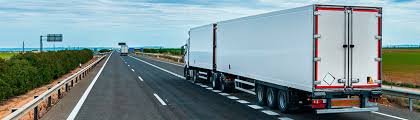
Le contenu de mon Duo Trailer: The Sustainable Revolution in European Freight Transport
The European logistics sector is moving toward a more efficient and sustainable model through new high-capacity transport solutions. Among them, the Duo Trailer stands out as an innovative system capable of reducing emissions, optimizing costs, and improving operational efficiency in road freight transport.
Real Emissions Reduction in Transport
The use of Duo Trailer vehicles combined with renewable HVO fuel (Hydrotreated Vegetable Oil) enables an estimated annual reduction of:
520 tonnes of CO₂
180 kg of nitrogen oxides (NOx)
This environmental impact is equivalent to removing approximately 440 conventional trucks from the road, marking a turning point in sustainable logistics.
What is a Duo Trailer?
A Duo Trailer is a modular road transport configuration in which:
One tractor unit pulls two semi-trailers.
Both trailers are connected through an intermediate axle known as a dolly.
Total length can reach up to 32 meters.
Load capacity: up to 70–72 tonnes.
Transport capacity: up to 132 Euro pallets.
Thanks to this design, a single vehicle can transport the equivalent load of two traditional trucks, reducing traffic congestion, energy consumption, and emissions.
HVO: Renewable Fuel Without Engine Modification
HVO is an advanced biofuel produced from vegetable oils and recycled fats processed with hydrogen.
Key advantages include:
Compatible with conventional diesel engines.
No mechanical modifications required.
Significant reduction of CO₂ and NOx emissions.
Maintains vehicle performance and operational efficiency.
This makes HVO an immediate and practical solution for decarbonizing road transport without complex technological investments.
Logistics Performance and Operational Savings
In countries such as Spain, where more than 90% of freight transport is carried out by road, the impact of the Duo Trailer is particularly significant:
Fewer vehicles required per shipment.
Reduced fuel consumption.
Optimized logistics costs.
Lower road congestion.
Emission reductions can reach 25–30% compared to conventional trucking operations.
Regulatory Framework and Safety
After more than five years of testing, traffic authorities have authorized Duo Trailer operations through special permits and validated transport routes.
These authorizations ensure:
Prior route assessment.
Control of access points and turning radii.
Progressive infrastructure adaptation.
Although operational limitations remain due to vehicle size, studies confirm that these vehicles are safe, efficient, and scalable.
Duo Trailer Implementation Across Europe
The development of the Duo Trailer is part of a broader transformation of European transport toward higher energy efficiency and reduced environmental impact. Several countries have already implemented or are introducing these vehicles within their logistics systems.
Nordic countries have been pioneers in this evolution. Sweden leads the adoption of high-capacity vehicles, allowing configurations of up to 34.5 meters after years of successful operational testing. Finland integrated long and heavy vehicles into its national transport network in 2019, strengthening efficiency over long distances.
In Southern Europe, Spain has made significant progress following more than five years of supervised trials. Duo Trailers currently operate under special route authorizations, marking the beginning of a gradual expansion within public freight transport.
Other European countries are advancing through pilot programs or equivalent modular transport systems (EMS). The Netherlands, Germany, Belgium, and Norway already use high-capacity vehicles in specific logistics corridors, while Denmark is working to expand its regulatory framework toward permanent authorization.
However, key markets such as France, Italy, and the United Kingdom still maintain regulatory limitations, although European emission-reduction targets suggest future legislative harmonization.
The expansion of the Duo Trailer reflects a clear trend: transporting more goods with fewer vehicles while reducing operational costs and emissions without compromising safety or logistics efficiency.
Expansion Potential in Europe
According to official estimates:
80 active authorizations could eliminate 35,200 truck journeys annually.
Savings of 21 million kilometers traveled.
Reduction of more than 19,000 tonnes of CO₂ emissions.
These figures position the Duo Trailer as one of the key pillars of sustainable road freight transport in Europe.
The Future of Freight Transport
Freight transport remains essential to ensuring the supply of food, medicines, and industrial goods. The combination of high-capacity vehicles and renewable fuels demonstrates that reducing carbon footprints is possible without sacrificing operational performance.
The Duo Trailer therefore represents a natural evolution of road transport: more cargo, fewer emissions, and greater sustainability.article
Contact
Business inquiries only. Privacy respected.
contact@marcelvian.com
© 2025. All rights reserved.